
Skip
Roof replacement, repair and hail claim help for Englewood, Colorado.

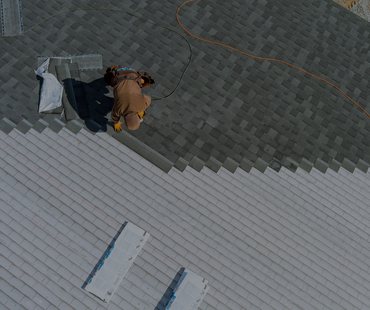
Asphalt Shingle Roofing, the Englewood Workhorse
Drive any grid street between Broadway and Santa Fe and you will see what covers Englewood: asphalt shingle on modest gable and hip roofs. It is the right material for this housing stock, affordable, repairable, code-friendly and available in Class 4 impact-resistant versions that make sense in a city with Englewood's hail record. We install architectural laminate shingles as the default and impact-resistant lines where the insurance math rewards them.
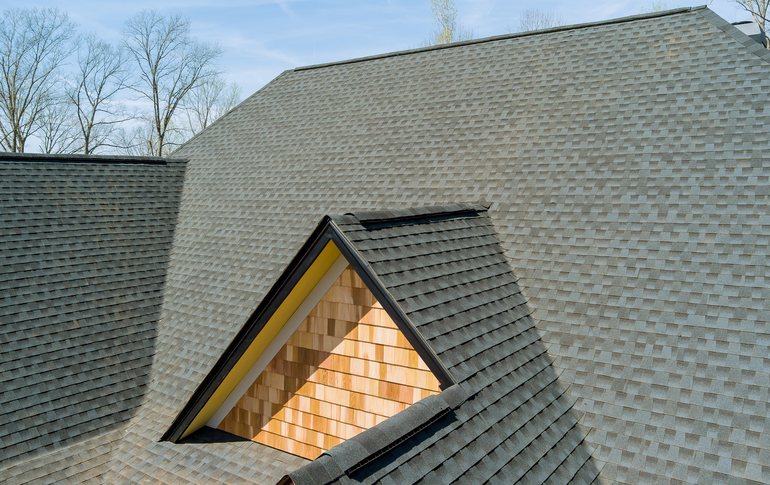
Shingle Options for Englewood Homes
- Architectural (laminate) shingles. The standard choice: 110 to 130 mph wind ratings, dimensional look, typically 25 to 30 year practical life in Colorado sun.
- Class 4 impact-resistant shingles. UL 2218 rated to survive 2 inch steel ball impacts. Colorado insurers discount premiums for them, and Englewood's hail history makes that discount durable. See the Class 4 guide for the payback math.
- Three-tab shingles. Cheapest up front, weakest in wind and hail. We install them on request, usually for rentals or pre-sale refreshes, and we say plainly what the trade is.
Every shingle system we install runs the full accessory stack required by the city's re-roofing rules and the manufacturer's warranty: ice and water shield 24 inches past the wall line, underlayment lapped to slope, drip edge at eaves and rakes, matched hip and ridge, and ventilation balanced to the attic.
Ventilation: the Quiet Killer of Englewood Shingle Roofs
Many 1950s Englewood ranches were built with minimal attic ventilation, then tightened further by decades of remodels. Cooked shingles age from beneath: granule loss accelerates, seal strips fail early, and the 25-year roof dies at year 17. On every re-roof we calculate net free vent area and correct intake and exhaust while the field is open, which is the cheapest moment that work will ever happen.
How We Install Shingles on Englewood's Mid-Century Roofs
A shingle system is only as good as what it is fastened to, and on this housing stock that means starting below the underlayment. Pre-1965 Englewood roofs commonly carry 1x plank or skip decking rather than modern sheathing, so before a single bundle goes up we walk the deck, renail loose boards, and flag any gaps wider than the shingle manufacturer allows, because a nail that lands in a gap is a nail that holds nothing. Fastening follows the schedule built from the city's published amendments, which list a 105 mph design wind speed; that is six nails per shingle in practice, placed in the nailing zone rather than wherever the gun happened to land. Cold-season installs get hand-sealing attention at rakes and eaves, since sealant strips need warm days to bond and a chinook winter will test every tab that never sealed. And where the shingle field meets a low-slope section, the membrane laps under the field with metal counter-flashing, the detail covered on our flat roofing page and the single most common leak point in this city when it is skipped.
How Long Asphalt Shingles Actually Last in Englewood
The wrapper says lifetime; the Front Range says otherwise. Between altitude UV, freeze-thaw cycling and the hail record, a standard architectural shingle here delivers 15 to 25 years of honest service, and the spread between those numbers is mostly ventilation and storm luck. An attic that cooks its shingles from below, common on remodeled 1950s ranches with buried gable vents, ages a roof five-plus years early, which is why vent correction rides along with every re-roof we do, priced in the scope as its own line rather than smuggled into the shingle number. Storm history matters just as much: a field that took the June 2018 hail without a claim is carrying bruises in its mat, and it will inspect older than its birthday. If your roof is past 15 and has lived through the 2018 and 2026 events, a free inspection tells you which side of the repair-or-replace line it is on before a leak decides for you.
The Accessory Stack That Keeps a Shingle Warranty Valid
Manufacturer warranties are system warranties: the shingle is covered when it is installed over the maker's listed accessories, and quietly voidable when it is not. That is the unglamorous reason our scopes itemize the stack instead of burying it in "includes all materials": ice and water shield to the city's 24 inch line, underlayment lapped to the slope's requirement, starter strip at eaves and rakes rather than cut-up field shingle, matched hip and ridge, and ventilation corrected to the attic's net free area. Every one of those lines also happens to be what keeps a roof watertight at 105 mph design wind and through freeze-thaw season, which is not a coincidence; the warranty exists to enforce the physics. When a bid is hundreds cheaper, this stack is usually where the difference is hiding.
Reading a Shingle Bid: What Belongs in an Englewood Scope
- The measured square count. Englewood ranches typically run 15 to 22 squares. A bid without a measurement is not a price; it is a guess with a signature line.
- The named shingle line and color, not "architectural shingle." Warranty registration needs the product name, and so does any future repair match.
- The city's code items as line items: ice barrier to 24 inches inside the wall line, drip edge at eaves and rakes, cricket behind any chimney wider than 30 inches, underlayment lapped to slope.
- Deck repair priced per sheet before tear-off, because on plank decking some repair is the norm, not the exception.
- Permit and final inspection included. Every Englewood re-roof needs both; a bid that is silent on them plans to skip them.
- Ventilation math, intake and exhaust, stated in net free area rather than "we'll add some vents."
Put two bids side by side with this list and the price difference usually explains itself in ninety seconds. We write ours so that comparison is easy, and we will walk a competitor's bid through the same list with you, no charge. One more habit worth keeping: photograph the bundle wrappers on delivery day. The wrapper records the exact line and lot, which is what warranty registration, future repair matching and any Class 4 insurance credit all key from, and it is the one piece of evidence that leaves the site in the dumpster.
Color and HOA note: most of Englewood's core neighborhoods predate HOAs, so color choice is genuinely yours. The city's guidelines advise a heads-up to an HOA only if you have one and are changing materials. If you are in one of the newer pockets with covenants, check before ordering. On the brick bungalows and painted ranches that define these grid streets, mid-tone weathered wood and driftwood blends flatter the masonry and hide the dust that summer construction season leaves on every roof in town; solid black fields read sharp on newer infill but show hail scuffs and lichen sooner on older fields. We bring full-size sample boards to the inspection so the decision happens against your actual brick, in your actual light.